No official status
Resonant Egypt is not a tourism authority, protected-area body, religious institution, research laboratory, recording archive or representative of the photographed places.
An independent editorial project
This atlas offers a slower way to understand place: not by collecting exotic sounds, but by noticing direction, interval, surface and change.
Why listen?
A source can arrive before it is seen, disappear behind another layer and return after a gap. Following that sequence reveals how water, walls, open ground and roads organise an experience.
Resonant Egypt turns those relationships into readable essays and simple notebook exercises. It is designed for curious travellers, students and anyone practising attention without specialist audio equipment.
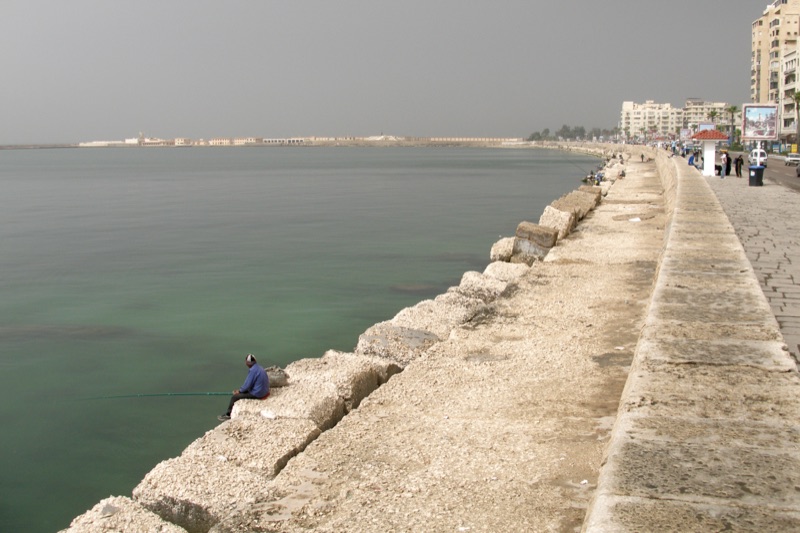
Alexandria Corniche and Mediterranean Sea. Photo: Vyacheslav Argenberg, CC BY 4.0.
Resonant Egypt is not a tourism authority, protected-area body, religious institution, research laboratory, recording archive or representative of the photographed places.
The site sells no tours, tickets, recordings, equipment, courses or memberships. There are no sponsored rankings or affiliate links.
There are no forms, accounts, comments, uploads, analytics or advertising trackers. All page assets are served locally.
It can teach a repeatable vocabulary for movement, repetition, distance and masking. It can suggest when paper is a better document than audio. It can show how to separate direct observation from explanation and uncertainty.
It cannot provide current access, safety, weather, transport or protected-area instructions. It does not verify whether recording is permitted at a specific place or time. Readers must follow current official guidance and the wishes of people responsible for a setting.
The editorial approach explains our evidence rules, and sources and image credits trace every photograph.