
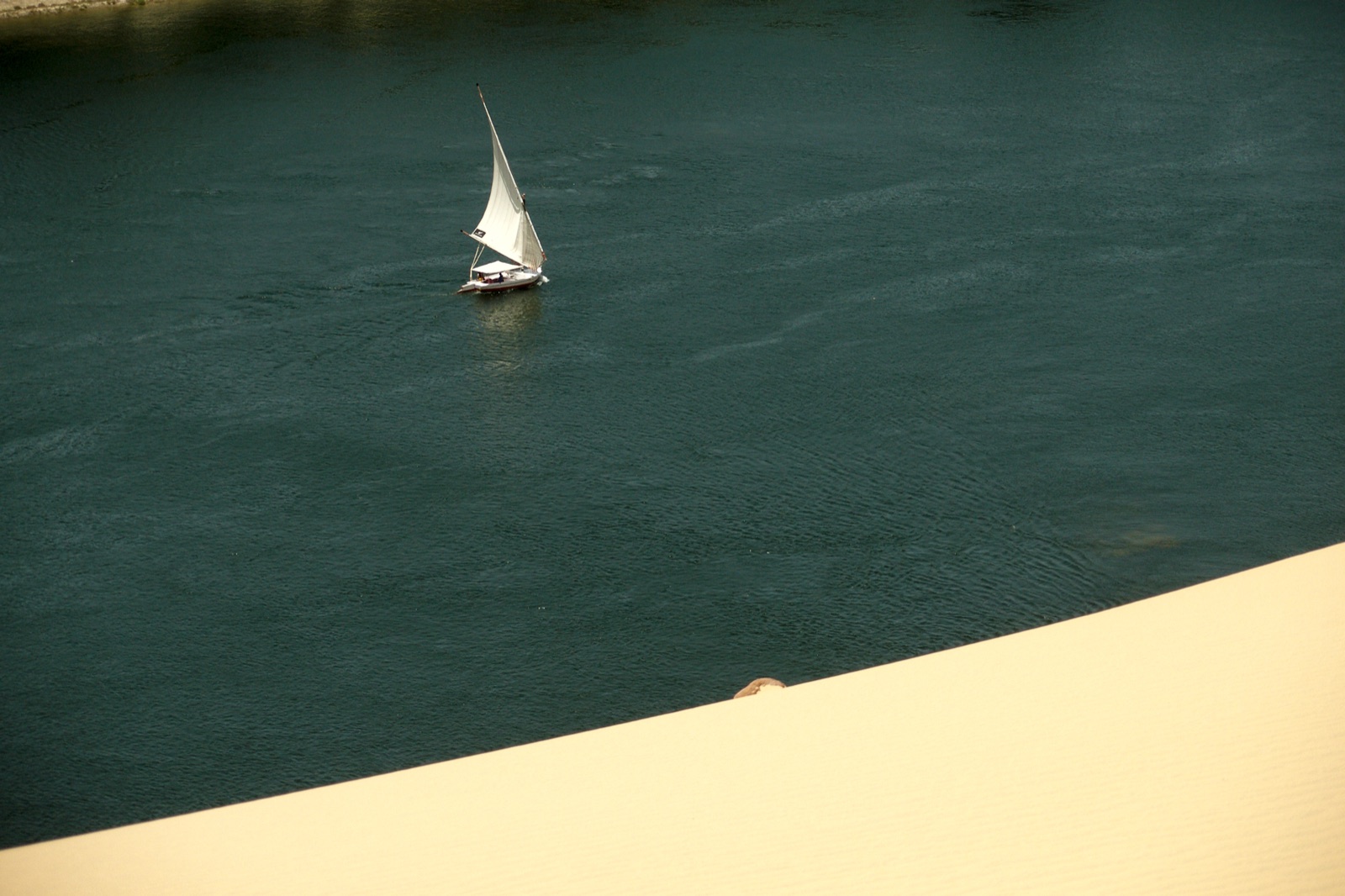
The river between boats
Separate water, hull, sail, engine and bank until a busy channel becomes several moving layers.
An atlas for listening in layers
Listen beyond volume. Follow repetition, interruption, echo and distance across the Nile, a Cairo courtyard, the White Desert and Alexandria’s sea edge.
Four listening situations
These notes do not promise silence or stage a perfect recording. Each one shows how a particular landscape changes the reach, rhythm and meaning of what can be heard.
Separate water, hull, sail, engine and bank until a busy channel becomes several moving layers.

Hard surfaces, narrow openings and protected interiors reveal why quieter does not mean disconnected.

Wind, fabric, footsteps and vehicle distance prevent the desert from becoming an empty-silence cliché.

Read wave cycles, wind and the road as overlapping bands rather than a contest for the loudest sound.
The field method
Let a place come to you for several minutes. Constant movement turns every sound into an unrepeatable fragment.
Near, middle and far are usable categories without a meter. Notice which layer changes when a boat, car or group passes.
Ask permission around identifiable voices, avoid private and sacred moments, and accept that a written note may be the better document.

One-minute exercise
It may be reed leaves, rope against wood, a shoe on stone or a wave retreating through gaps. Follow its pattern without naming the entire place.
A small repeat can reveal wind direction, surface texture and the distance between you and an edge.
Reeds on the Nile bank at Aswan. Photo: Güldem Üstün, CC BY 2.0.
Draw the sound map