Note 03 / exposed distance
After the White Desert wind
The White Desert is often sold through the language of complete silence. Listening carefully produces a more truthful landscape: gusts, fabric, steps and distant activity separated by changing intervals.
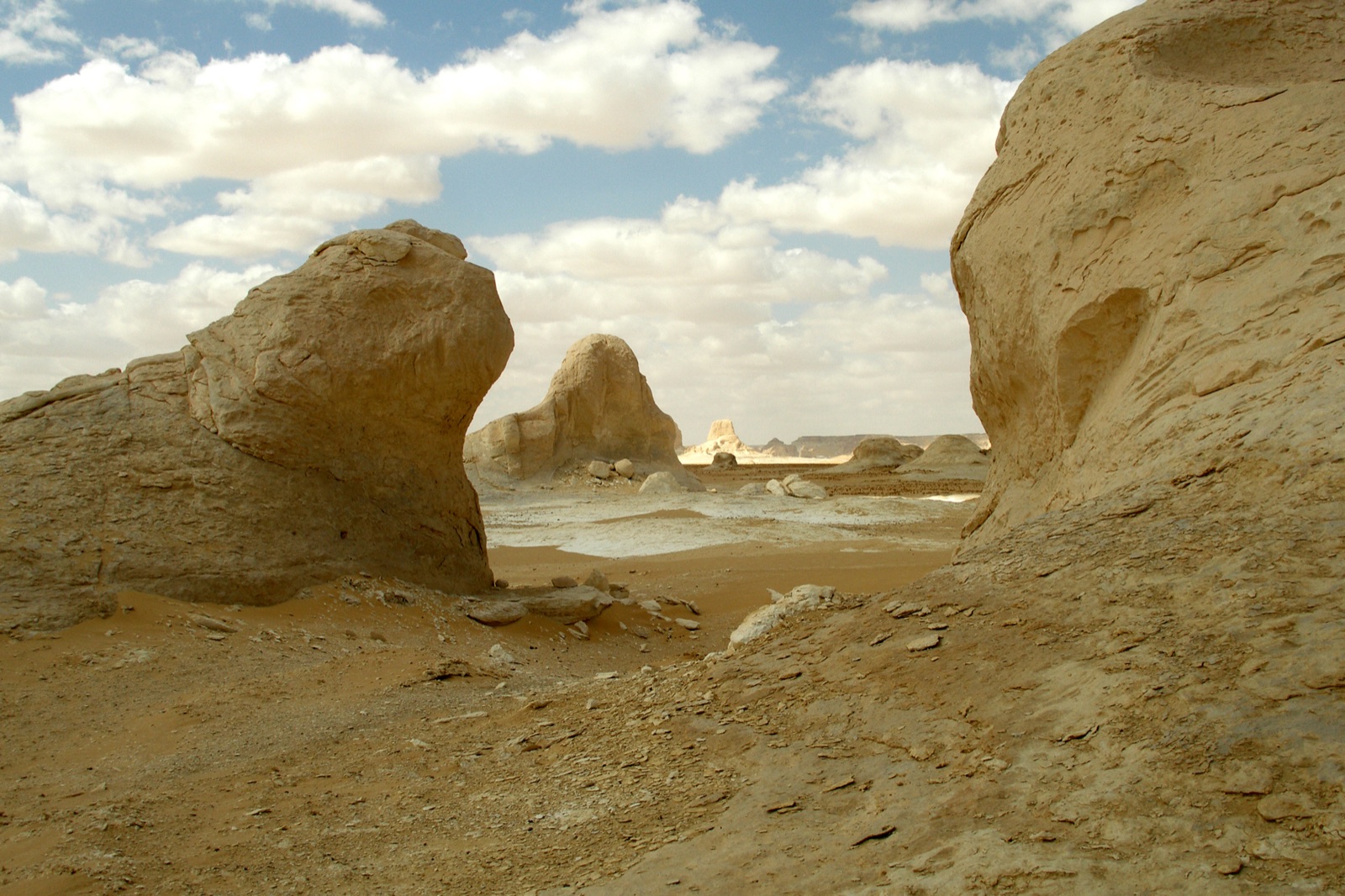

“Silence” can be a useful personal impression, but it is a poor inventory. Open ground reduces some continuous urban layers; it does not remove weather, wildlife, equipment, people or transport. Begin with a less dramatic question: what is the smallest repeated event you can follow without leaving the permitted place where your group has stopped?
Wind is several sounds at once
Wind itself is not heard as an abstract stream. It becomes audible through contact: jacket fabric, a hood edge, sand or loose material near the ground, a tent line, a vehicle, a plant, or the listener’s ears. Turn slowly only when safe. A source that changes strongly with orientation may be extremely close—sometimes your own clothing—rather than a feature of the wider landscape.
Write the gust as a sequence. A faint approach may rise through one side, broaden around you, then leave small movements behind. The pause that follows is part of the pattern. Counting approximate intervals between gusts is more useful than declaring the whole scene calm or windy.
Self-noise check
Stand still for thirty seconds. Relax your bag straps and stop touching equipment. Identify breath, fabric and shoe movement before mapping distant sources. The observer should not be mistaken for the landscape.
Footsteps reveal a temporary surface
A step can sound compact, granular, dull or scraping according to the immediate ground and footwear. This is local evidence, not a geological diagnosis. Avoid stamping or walking repeated patterns for a recording. Natural movement already provides enough comparison, and unnecessary trampling can damage fragile surfaces.
Do not approach or touch chalk formations to test how they respond. The White Desert is a protected landscape, not an acoustic prop. Follow current access rules and responsible local instructions, remain on permitted routes and leave natural objects where they are.
Distance needs time
In a broad view, an approaching vehicle may remain audible for a long interval. Wind direction and terrain can make its apparent distance difficult to judge. Record only the progression: first detected, temporarily lost, clearly visible, closest, receding. Do not estimate kilometres from sound alone.
A far conversation can also seem surprisingly present when competing layers are low. That clarity does not make it public material. Voices may belong to another group whose private exchange carries across open space. Listen to rhythm and direction without recording identifiable content.
Formations are visual boundaries, not proof
Large chalk forms divide sight lines and create sheltered sides, but a casual visitor should be cautious about claiming a specific acoustic effect. Compare two permitted listening positions only if the route naturally includes them. Note wind exposure, orientation and visible barriers. A difference may come from several changing conditions, not the rock shape alone.
This restraint matters because dramatic landscapes invite dramatic explanations. “The formation blocked the gust at this moment” is defensible; “this rock creates a silent zone” is a much larger claim.
Make the pauses visible
Draw a horizontal timeline. Use thick marks for gusts, thin marks for close fabric, dots for footsteps and a long band for distant transport. Leave blank space when no distinct event held your attention. The blanks are not proof of absence; they show the limits of what you noticed.
When a source is audible but hidden, resist completing it from expectation. Mark direction as uncertain and wait for independent evidence. Open terrain can make an indistinct event feel close or important; uncertainty is more accurate than a dramatic label.
Desert conditions can be demanding and change quickly. Listening never outranks safety, navigation, weather guidance or protected-area rules. Do not separate from a group, walk into darkness or remain exposed to complete a timed exercise. A responsible map may end early.
The White Desert does not need the mythology of absolute silence. Its acoustic character is strong precisely because small events, long approaches and weather-driven change become easier to compare. Listen for proportion, then leave without adding another unnecessary sound.